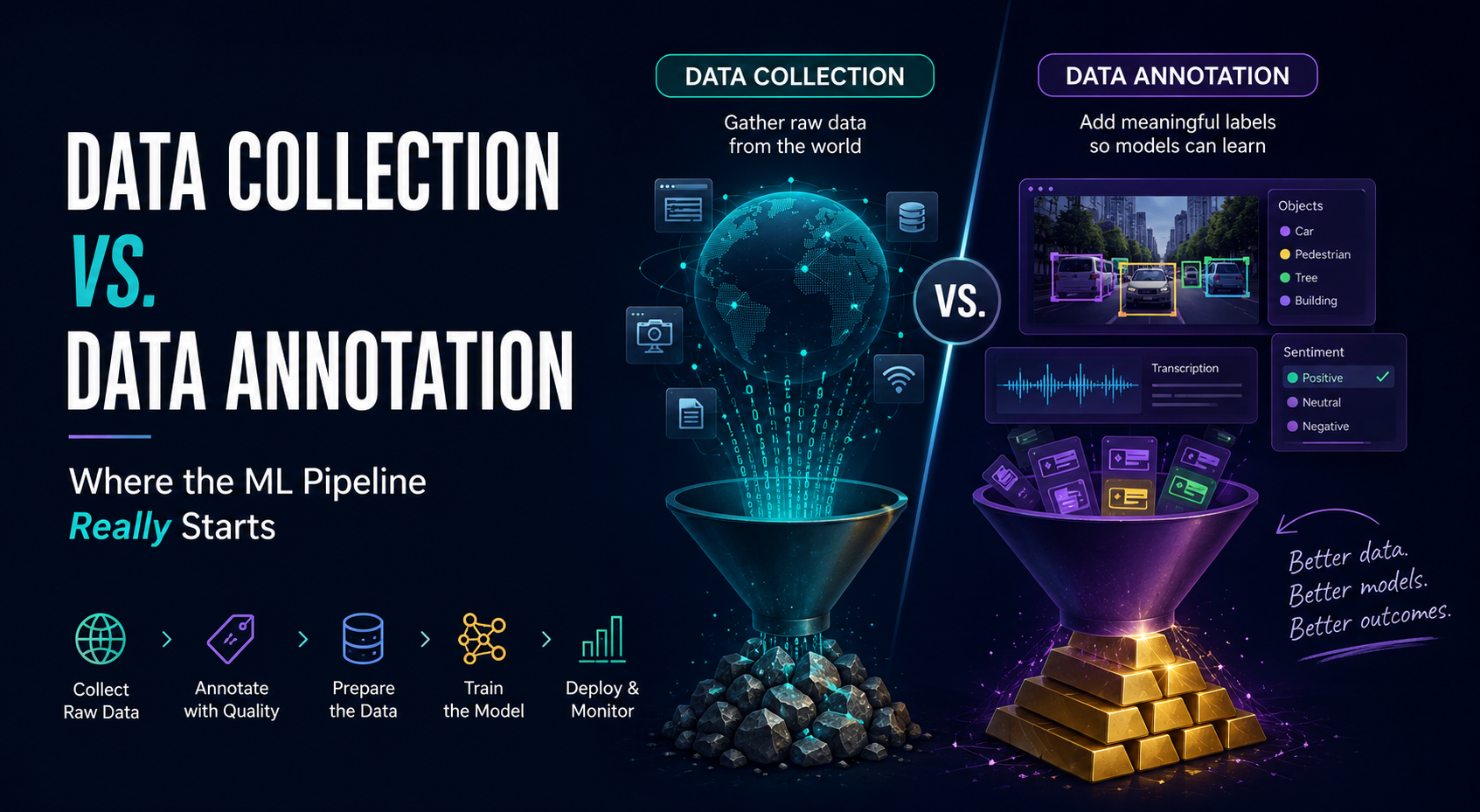
A machine learning model is only as good as the data you feed it. It’s a statement you have heard a hundred times, but it remains the single greatest bottleneck for teams building AI today. The challenge isn’t just finding data; it’s structuring messy, unstructured web content into clean, labeled formats that models can actually learn from. And that process is rapidly moving away from manual coding and toward specialized platforms .
For early-career ML practitioners, junior data scientists, and engineers new to machine learning, the ecosystem of data collection tools can be overwhelming. Should you use a simple web scraper, a full-scale enterprise proxy network, or a platform that offers AI-powered structuring? Platforms are emerging to bridge this gap, but understanding what is available and when to use it is the first step.
What works for a student downloading a static dataset differs significantly from what a business needs for real-time market intelligence. The goal here is to provide a mental framework. We want to move you from “how do I get data?” to “which tool is the right tool for this specific job?”
The Three Pillars of Data Collection
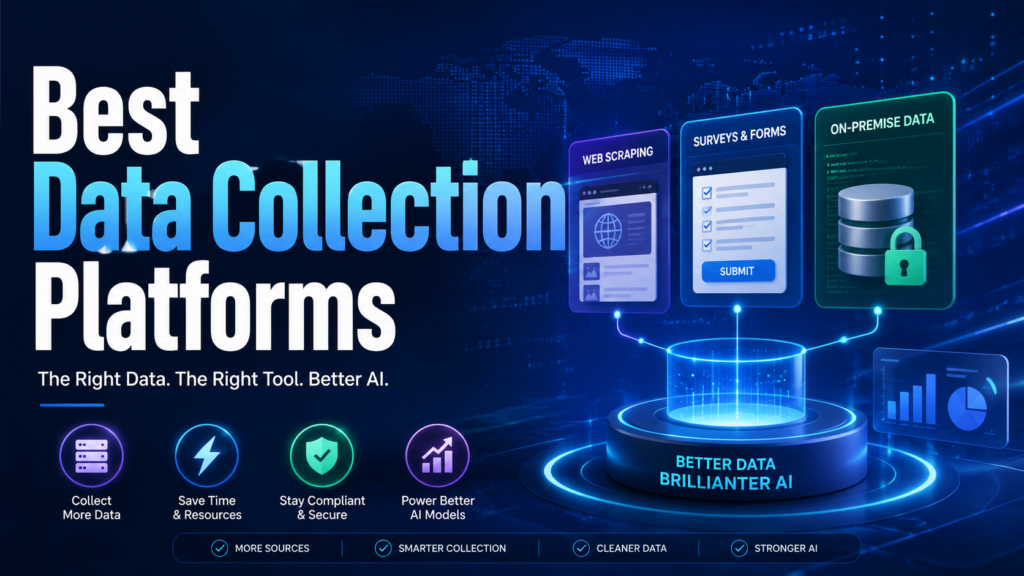
Before we look at specific solutions, it helps to simplify the landscape into three broad categories. Most data collection for AI falls into one of these boxes:
- Web Scraping & APIs: This involves extracting data from websites (e-commerce, social media, news) or pulling structured data from Application Programming Interfaces. This is the most common method for getting large volumes of fresh data.
- Surveys & Forms: This is for collecting human-generated data directly from users, customers, or employees. This is crucial for subjective data, feedback, and research.
- On-Premise & Internal Data: Many organizations need to collect data from their own servers, applications, or IoT devices without it ever touching a public cloud for security or compliance reasons.
While each uses different tools, the best modern platforms are increasingly combining these elements to provide end-to-end solutions .
1. Web Scraping: From Code to “No-Code”
Web scraping used to mean writing custom Python scripts with BeautifulSoup or Scrapy. While these are still powerful, they are brittle. Websites change their structure, and you spend more time fixing broken code than analyzing data.
Modern platforms abstract away the complexity. They handle proxies, CAPTCHA solving, and JavaScript rendering, allowing you to focus on the data itself .
The Standouts in 2026:
- Apify: Often cited as a leader, Apify is a massive marketplace of pre-built scrapers (called Actors). If you need data from Amazon, Instagram, or Google Maps, chances are someone has already built a scraper for it. It’s a great “pay-as-you-go” solution for devs who want speed .
- Oxylabs & Bright Data: These are the heavyweights for enterprise-scale scraping. They are less about “no-code” and more about providing the infrastructure (massive proxy pools) and APIs to collect data from the most difficult-to-reach websites without getting blocked .
- Firecrawl: Built for the AI era, Firecrawl specifically converts web pages into clean Markdown formats optimized for Large Language Models (LLMs) and Retrieval-Augmented Generation (RAG) pipelines .
2. Surveys and Structured Feedback
Sometimes you need data that is not on the public web. You need to ask questions. Surveys are the lifeblood of market research, customer satisfaction, and academic studies.
The Choice:
- Google Forms: This is the baseline. It’s free, incredibly easy to use, and connects directly to Google Sheets. For internal polls, RSVPs, and simple data collection, it’s usually enough. However, it lacks advanced logic and a polished user interface .
- Typeform: If the respondent experience matters, Typeform is king. Its conversational interface has been shown to improve completion rates for customer-facing forms .
- Jotform: This is the workhorse for complex workflows. It allows for deep conditional logic, payment collection, and signature capture, making it perfect for HR, finance, or operations. However, the free tier has strict limits .
3. On-Premise and Unified Platforms
For industries like healthcare, finance, and government, data sovereignty is non-negotiable. Data cannot leave the company’s servers.
The Tradeoff:
Most traditional “on-premise” tools handle only one type of data. Matomo is great for web analytics, while LimeSurvey handles surveys. This leads to data silos where information is fragmented.
A new category of platforms—like Countly—is emerging to solve this by offering a unified system that combines analytics, feedback, and surveys in a single self-hosted deployment . This saves teams from having to “stitch” data together from multiple tools just to get a full picture.
Making the Choice: A Framework
If you are staring at a list of tools and feeling paralyzed, consider this a cheat sheet for how to decide. It is less about which tool is “best” and more about understanding where your project fits.
| Data Source | Best Tool Categories | When to Use | Pitfalls to Avoid |
| Public Websites | Web Scraping Platforms (Apify, Oxylabs), AI Scrapers (Firecrawl) | When you need large volumes of product data, social media sentiment, or news articles. | Using a simple scraper on a website that uses heavy JavaScript or anti-bot measures. |
| Human Input | Survey Platforms (Typeform, Jotform), Internal Tools | When collecting feedback, customer data, or research responses. | Using Google Forms for a complex study requiring logic or high completion rates. |
| Sensitive Internal Data | On-Premise/Unified Platforms (Countly, self-hosted options) | When working with PII, financial data, or under strict compliance rules (GDPR, HIPAA). | Relying on cloud-based tools that do not offer data isolation. |
Building a Competitive Edge
In the rush to build models, data collection is often treated as a chore. But it is a competitive advantage. The companies that will win with AI are not necessarily those with the best algorithms but those with the most relevant, clean, and proprietary data.
If you are building a system that relies on real-time data, implementing a robust collection pipeline is more important than optimizing your model architecture. A well-designed pipeline will provide fresh, high-quality data on a schedule, ensuring your models stay accurate and relevant .
Conclusion
Data collection in 2026 is defined by abstraction. The days of writing scrapers from scratch and wrestling with proxies for a single project are fading. Platforms offer a spectrum of solutions, from easy-to-use form builders like Google Forms to enterprise-grade scraping APIs from Bright Data, and even unified on-premise systems that connect analytics with feedback.
The key takeaway is to not pick a tool first. Define the shape of your problem: Where is the data? Is it public or private? Is it structured or messy? Once you define the problem, the solution becomes clear. Whether you are exploring the capabilities of platforms to handle complex geospatial data or simply grabbing a pre-built scraper for an e-commerce site, remember that access to the data is the first, and most critical, step. Pick the tool that makes that access easiest, and you have already won half the battle.